

When I was a child, my parents tried their best to indulge my every whim, and I have always held this against them. I understand why they did it — it was love and affection and all such mawkish compulsions that impair people with kids — but I wish there was a little more of the iron fist in a velvet glove approach. I wish when I’d ask my mother to make chole bhature, she would instead serve aloo potol er dalna.1 I wish when I’d demand a new Hot Wheels car as pay-off to sit through a haircut, my father would refuse. I wish they just said ‘No!’ more often.
Growing accustomed to getting whatever you want is a dangerous thing. An adolescent needs to face rejection. He ought to have some dreams nipped in the bud, a few desires crushed beneath a cruel boot. Fail to instill such early lessons and the boy grows up to be an adult who is ill-equipped to deal with a snub.
I suppose things may have gone differently if I’d made an earlier foray into romance. School-era crushes, with all the attendant pining and spurning, are great at steeling one’s heart; especially when they are one-sided. I have friends who had their declarations of love rebuffed when they were in Class 4, and as a result, by teenage they were hardened souls. Unfortunately, I squandered most of my youth at an all-boys’ institution. The opportunity for my first crush arose only when I started higher secondary school.
She and I were classmates, and I was smitten from the start of the term. Over the course of two years, through Classes 11 and 12, I remained steadfast in my devotion even as I had less than a dozen conversations with her. I compensated for this lack of communication by stealing glances in the Chemistry lab and casting shy smiles in her direction during English period. I did what any reasonable hero in a Bollywood movie would do to attract the heroine’s attention (though I did draw the line at catcalling). To my shock and dismay, these non-verbal cues did not cause her to run into my arms. I never did muster up the courage to ask her out, and so my ardour remained suspended in limbo: unexpressed, unrequited, unfulfilled.
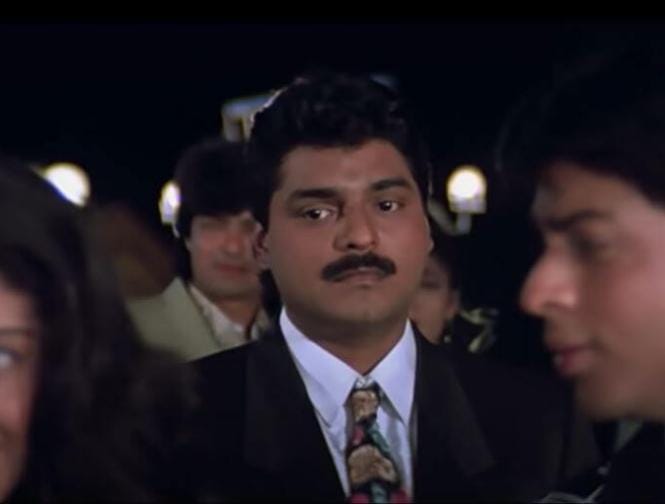
Ultimately, the whole affair was not much of a lesson in rejection because I did not give her the chance to reject me. In fact, I suspect if I had confessed my feelings to her, she would not have turned me down. I suspect she, too, liked me, because of the French character incident.
The French character appeared in a play, adapted from a P. G. Wodehouse short story, that my friend and I performed at school. The play was meant to be our tribute to the master. It was also meant to impress the two girls we were mooning over at the time.
My friend played the part of a young English nobleman; I was his French valet. Now, it is easy to specify the nationality of a person on the page, but such things are far harder on stage. A lesser actor would have relied only on an accent to lend a Parisian touch to the role, but my ambitions soared higher. I wanted the performance to have panache, a certain savoir-faire that would wow the audience and, in particular, a young woman in Class 12A. For this, I realised, I needed not just an accent but a repertoire of French phrases. After weeks of rehearsals, however, it was clear I could only remember a solitary line in French. I decided to make the most of it. And so it transpired that when we finally staged the play, I punctuated nearly all of my dialogues with the exclamation: ‘Ooh là là, Monsieur! Ooh là là!’
‘Did you like the performance?’ I later asked my beloved, my clammy hands twisting the beret I’d worn as part of the act.
‘Oh yes. It was great,’ she said with a smile that outshone the sun.
‘Did you notice my character was French? Took a lot of practice.’
‘It was amazing. You were the best!’
‘Mercy, mademoiselle!’ I responded with a bow. ‘Mercy boku!’
She would have made a dreadful theatre critic, bless her, but I think she would have been a supportive girlfriend — if only a debilitating shyness, and a fear of rejection and the embarassment that’d follow, hadn’t stopped me from taking a chance.
My first real brush with rejection was during a job interview at university. A top-tier law firm I had interned with in the summer was the first to visit campus when recruitment season kicked-off. The internship had gone well, so naturally, I thought I stood a good chance.2
I cleared the written test with ease. About a dozen of us were selected for the interview, and when it was my turn I strode into the room. For ten minutes or so, we discussed academic matters and when the interviewers asked me which legal subjects I liked the most, I suppressed the urge to snort. I concocted some answers I thought they’d find acceptable, being careful not to name anything as far-fetched as indirect taxation or property law. I also reminded them I had spent six weeks at their Mumbai office (which was true) and had enjoyed every minute of it (which they had no way of proving to be false). When one of the interviewers mentioned that he remembered me and had received a favourable report about my time with them, I did a fist pump under the table. The deal, I thought to myself, was sealed.

And then, they asked me the question that proved to be my undoing: ‘So what other interests do you have, outside of law?’
I think if I had been nervous, and unsure about my prospects, my response would have been more measured. But confidence made me relax into a long monologue. I spoke about books and sports. I started with football and took the scenic route to arrive at tennis. Wimbledon was underway, so it seemed fitting to talk about the previous year’s final, the one Rafael Nadal won in five sets after a four-hour-and-forty-eight-minute battle with Roger Federer. It was the greatest tennis match I’d ever seen, so taking ten minutes to sketch the highlights felt appropriate. When I finally paused, to catch my breath, the interviewers looked bemused.
‘You must like tennis a lot,’ one of them remarked, with that dead-eye stare that all lawyers must master.
‘Not as much as football,’ I said, with a grin. ‘But yes. Yes, I do.’
‘It seems so,’ he continued, ‘because you spoke about that tennis match with more passion than at any other point during this interview.’
I felt the air whooshing out of me, like a balloon being deflated. I registered a weak protest and assured him that my passion for the law ran deep. Nothing pleases me more than reviewing repayment clauses of loan agreements, I wanted to say. Just hand me a couple of hundred contracts to summarise and see how my face lights up.
But I knew it was too late to salvage the situation.
Later that evening, the firm released a list of the people they’d chosen to hire. My name was not on it.
Ever since I started writing, I have become more familiar with rejection. A bit too familiar, to be honest. I wish there was at least one literary magazine that did not deem my stories unworthy of being included in their roster. And it’d be nice if every submission to a fellowship or a contest did not end in dismissal. But they say frequent crying leads to ‘unusually clear and radiant skin’ so I shouldn’t complain. Besides, after a few dozen attempts, you grow to expect that an editor will ignore your cold email. You cease to feel upset or frustrated by this eventuality. When you accept the inevitability of failure, you become invulnerable. It is the hope that kills you.
Which is why rejections that are unforeseen, that deny you something that you thought was your due — like, say, a tourist visa to Sweden — can leave you stunned, as if someone from the Swedish Embassy — a tall, blonde gentleman, perhaps, with a mohawk and an axehead tattoo on his neck — had kicked you in the gut and then sounded a Viking war horn as you lay whimpering on the ground.
The visa application process, for Indians travelling overseas, has always been tedious. For all the soft power our country has accumulated, and all the packets of Melody chocolate the Great Leader distributes, the Indian passport remains weaker than the Indian Rupee. Vacations to Europe, especially, require weeks of planning just to get an appointment at the visa centre. I used to be annoyed by the paperwork, but at least I could rely on the outcome. On every past occasion, my passport returned with a new stamp. The whole experience was akin to sitting though a tiresome lecture. My privilege ensured that I never thought of it as an exam I could fail.

This year, too, when applying to Sweden for a Schengen visa, I felt much the same way. I assembled my bank statements, my tax filings, my salary slips, and a bunch of other documents I grumble about disclosing to the Indian government, and I handed them over to the Swedish authorities. I confirmed to them that I was, to the best of my knowledge, not a terrorist and did not, at present, intend to pursue a career in crime. I let them take my fingerprints and some unflattering mugshots. And I even gave them my phone number, knowing well it’d lead to a spike in spam calls.
A couple of weeks later, an envelope arrived on a Saturday morning. It contained twelve unstapled pages of which the most crucial ones contained the line: ‘Your visa application is therefore refused’. This grim declaration was preceded by a paragraph explaining the ‘assessment’. One reason cited was a failure to provide, and this is a direct quote, ‘a satisfactory explanation to why you chose to travel to Sweden specifically for tourism’. The appropriate response to this should have been: ‘Wait, are you implying Sweden is a terrible tourist destination? How does someone with such a low opinion of their country get a job in government?’ But etiquette stayed my hand. Instead, I sent them an impassioned plea, urging them to reconsider. My wife and I hold your nation in high esteem, I wrote, and have long wished to travel there. We are fascinated by your landscape, history, culture — but not so fascinated, of course, that we’ll begin living there illegally. We definitely plan to return, fear not.
I was hopeful my clarifications would quell their doubts. Not so, as it turned out. Ten days later, they wrote back saying they saw no reason to change their decision. Stockholm, it seemed, would remain out of reach.
I try to not be petty, like those people who nurse a grudge for a lifetime. And so, I do not want Sweden to be knocked out of the FIFA World Cup at the group stage. I did not take any pleasure from the hammering the Dutch football team administered them. I did not clap my hands, as the camera panned to grim-faced Swedes in the crowd, and shout: ‘You deserve this, you snivelling, snooty Scandinavian scum!’ I may have been hurt by their rejection, but I do not wish them ill. I will admit, though, that I no longer have any interest in visiting Sweden. If they refused to have me, then I, too, refuse to grace their shores. The only scenario where I foresee changing my mind about this will be if I receive an invitation from the Nobel Committee. In that case, I will consider the request, and assess if I should accept or reject it.
Aloo (potato) potol (parwal/pointed gourd) er dalna is a Bengali dish, prepared as a curry, that is commonly found in prison canteens. For particularly hardened criminals, it is paired with shukto.
The internship had offered a foreboding view of life as a corporate lawyer — of the long nights and too-short timelines. But securing a job at the end of university was the norm and a marker of success. It’d take me many years to recalibrate this notion.
Very nice. Write about other girls 👏🏼
Amaze. Too good!