
Elements of Style
On Fashion & Trends

The trouble with being stubborn and conflict-averse, when you’re shopping with your family, is you end up with a wardrobe full of clothes you do not want to wear. I have been plagued by this problem since childhood. Every year, a few weeks before Durga Pujo, my mother would take me to New Market to buy outfits I would debut during pandal-hopping excursions. This was before the era of shopping malls and e-commerce. New Market — a blood-red building with a colonial-era cannon at the heart of its shop-lined lanes — was the original site of fast fashion in Kolkata.1
In the stores that sold kids’ clothing, my mother called the shots. Trouble started brewing when I was old enough to have opinions. I must have been thirteen or fourteen at the time of the orange t-shirt incident.
It was a half-sleeved tee with a Henley collar, and when viewed from a distance it did not, I admit, cause you to gag. Perhaps that was why my mother asked the shopkeeper to pull it out of the shelf and unfold it for inspection. Why don’t you try it on, she urged me. I was ambivalent about the tee, but what harm could come from a trial? It was only when I had wriggled into it, infront of a full-length mirror, that I was hit by its profound hideousness.
Do you remember the top Hrithik Roshan wore in Ek Pal Ka Jeena? The black stocking that clung to his torso and made no effort to cloak his nipples or his glorious abs? The orange t-shirt belonged to the same family of garments, a family that believed there should not be an atom’s breadth of space between skin and cloth. This is not objectionable per se. Some people benefit from wearing cling wrap film masquerading as clothes. I have no doubt Hrithik would’ve looked great in that t-shirt, like David spray-painted by an RSS enthusiast. Unfortunately, I — with my slender arms and narrow chest — looked like a test tube of orange squash.
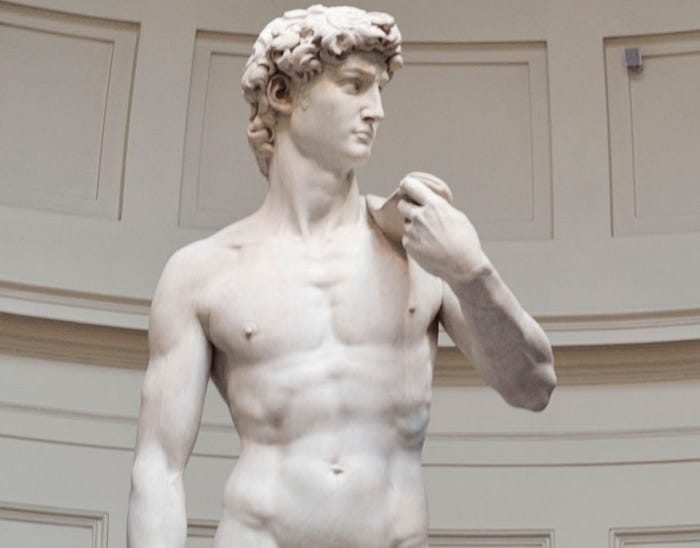

I walked out of the changing room, dazed, expecting my audience to recoil. Imagine my surprise when my mother, and the shopkeeper, cried out in delight and insisted I buy the rag. The latter’s motivations were clear to me. Every sale counts and business is paramount. So I did not begrudge his insincere cooing. But how could my own flesh and blood want me to wear that thing in public? I aired my concerns but my mother stood firm. Such a lovely colour, she said. As so often happened in such situations, I soon gave in because any prolonged disagreement made me uncomfortable. If my aversion to conflict meant we ended up taking the t-shirt home, I didn’t mind. I knew my stubbornness would ensure I’d never wear it again.
By the time I started University, I had greater authority to decide the contents of my closet. Parental feedback was permitted, a concession one cannot avoid granting to folks who foot the bill, but the final decision lay with me. This autocracy, I realise now, did not always produce the best results.
In the first half-hour of The Devil Wears Prada, there’s a scene where Andy (Anne Hathaway) snorts in amusement when a couple of near-identical belts are compared to choose the best fit. In response, Miranda Priestly (Meryl Streep) launches into her Cerulean Sweater monologue. Through a series of corkscrew jabs, delivered in that terrifying murmur, she charts the route haute couture takes in travelling from designer studios to shopping mall clearance sales.
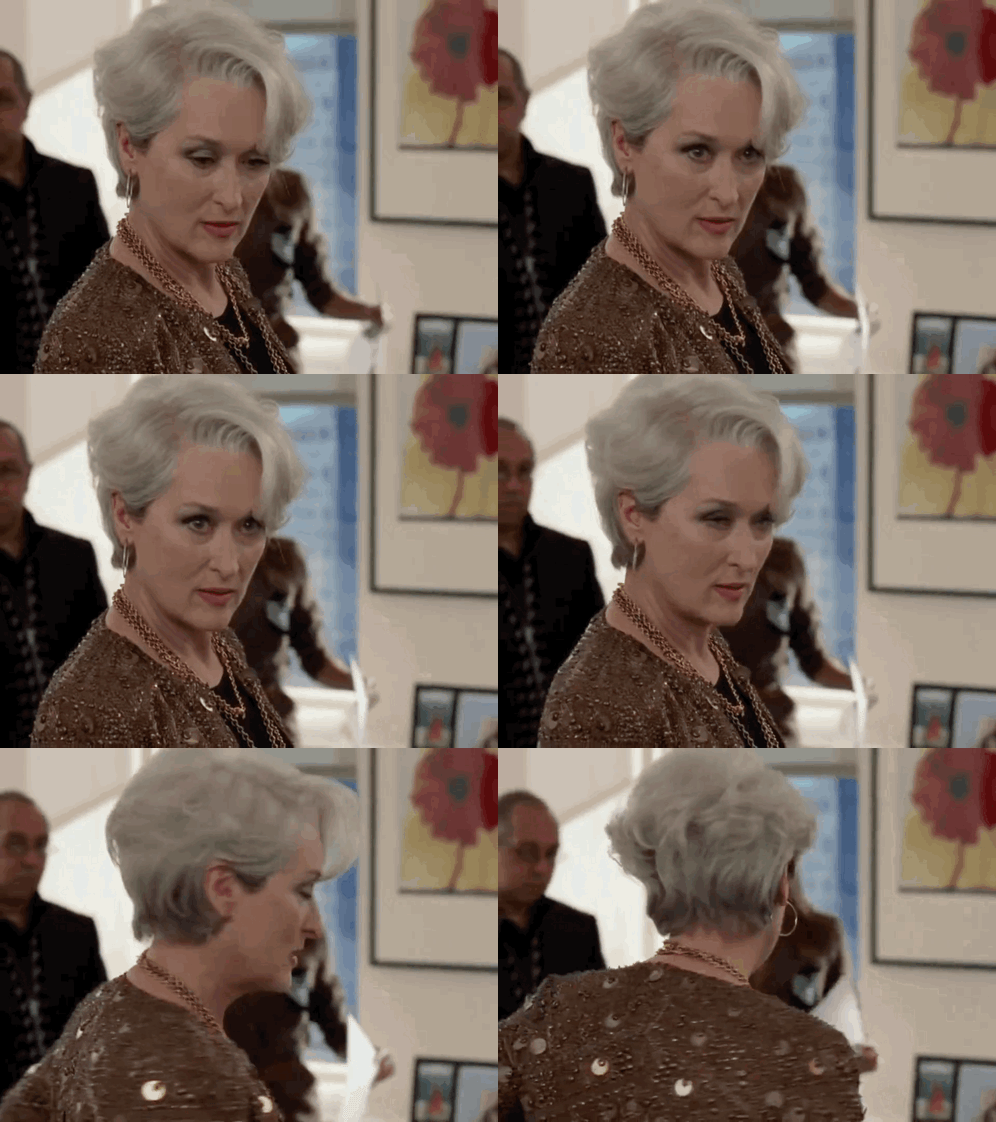
The journey made sense, in theory. I could, if I squinted, spy a similar connection between high-street boutiques and the racks I browsed at Shopper’s Stop. But, much like Andy, I was not interested in the provenance of the clothes I picked. The glamorous world of men’s fashion, with its leather shoes and sharp suits, had little to do with me. I looked, instead, for t-shirts that sported sassy messages. (‘Do I look like I care?’ and ‘I’m with stupid 👉🏼’ are two examples.) These t-shirts would often be two sizes too large for me — a deliberate ploy to hide my gangly physique, but one that only made me more closely resemble a scarecrow. I also had a weakness for baggy cargo trousers and, I shudder at the memory, calf-length capri pants. You may recall they were all the rage in the 2000s, which begs the question: What the fuck was wrong with us?
I do not own any capris now, thank god, but my love for sweaters has survived. Ever since I was a child, I’ve rejoiced in buying all manner of winter wear: sweaters, sweatshirts, jackets, hoodies. Living in Mumbai for sixteen years has not diminished this passion. Every December, I pull out my collection and run my hand over the woollen sleeves and the knitted collars. I imagine slipping into a cardigan and wrapping a scarf around my neck; perhaps even wearing a pair of gloves and donning a monkey cap. Then, I remember where I am, so I wipe my brow, turn up the air conditioning and pack my darlings away with a wistful sigh. Unless there is a wedding to attend.
Friends, it is time I posed to you a question that has threatened the very roots of my marriage. Be judicious in your response.
If I’m invited to a reception dinner, any time between the months of November to March, I immediately reach for a sweater. Simran detests this habit. To her, this is not a personal failing but a civilizational crime. ‘I do not understand this,’ she rails. ‘What is wrong with you Bengali men?! The women spend hours getting ready to attend a function — sitting through make-up sessions, doing their hair, draping a saree. They take such pains to look good, to honour the occasion by making an effort. And you fellows just amble in there in your sneakers and your sweaters, looking ridiculous. It’s unacceptable!’
I resent this charge, of course. It is not indolence that guides my sartorial choices, but a keen sense of style. And my sweaters are nothing like the stuff Bengali uncles wear. My sweaters are gorgeous. I try explaining these nuances to Simran but she refuses to see the light. ‘Wear something proper, like a suit or a kurta. If you’re wearing a sweater, I’m not coming with you,’ she threatens. And so I end up going to these events alone.2
A few weeks ago, the Mint Lounge cover story wondered: Are Indian Men Dressing Sexier?. The answer was a cautious yes. There was no sea change yet, the article conceded, but it noted ‘…the beginning of Indian men’s quiet desire to elevate their style game.’ A designer quoted in the piece observed: ‘The average guy never really thought of style 20-30 years ago. Now, he is. Have you seen the guys (male shoppers) coming out of Zara? Many of them are so chicly dressed.’
My heart sank as I read this. It’s been years since I stepped inside (or out of) Zara. What about Uniqlo? I wanted to ask the designer. Does Uniqlo count? Am I cool and stylish if half my wardrobe is monochrome crew necks and t-shirts with Japanese motifs?
Not that it matters. I know I am not one of those Indian men who quietly desires to elevate his style game. I am the Indian man who dresses like an overgrown toddler.3 For any casual outing, instead of trousers I wear joggers, with an absurd number of pockets. The few t-shirts I have not sourced from Uniqlo feature cartoon characters. I own no linen blazers or crochet shirts, no long-sleeved polos or multicoloured shackets. And my sneakers would fit right into a teenager’s shoe rack.
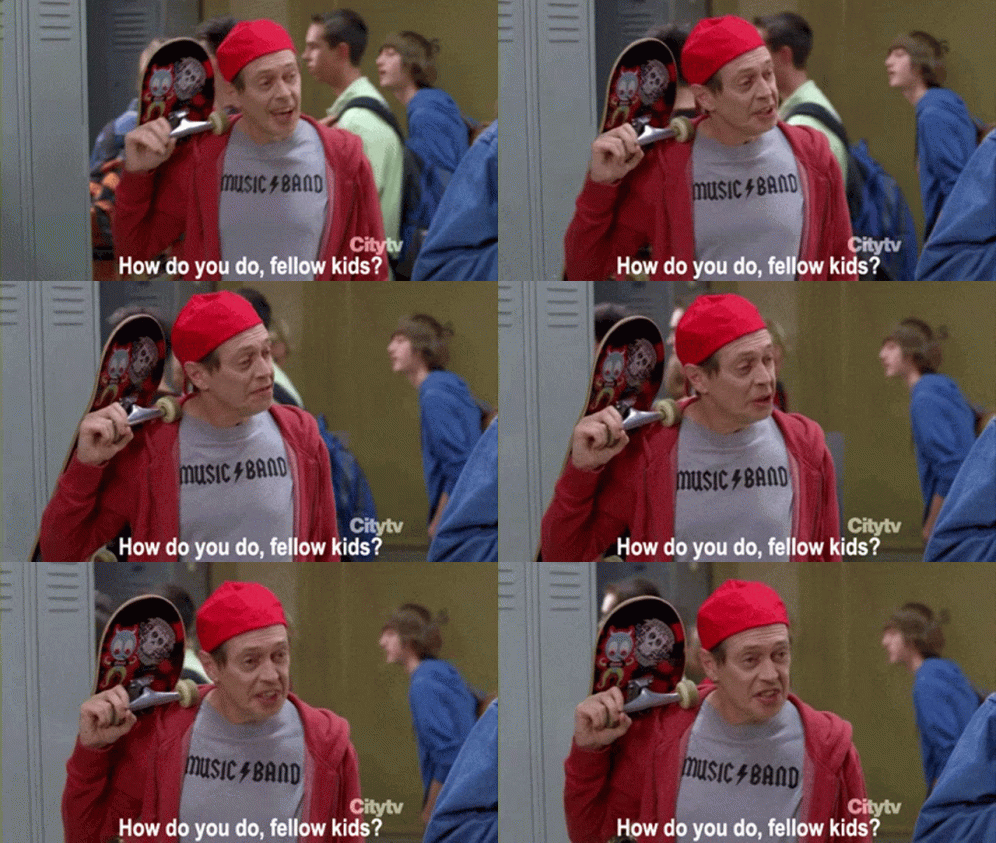
My father never dressed like a grad student in his late thirties, but times have changed. Now, this youthful sensibility, borne out of a desire to deny the onset of middle age, is the hallmark of my generation.
Look around and you’ll spot men in comic book tees that’d look more appropriate on the children they are wheeling around in prams. You are likely to see more shorts at a brunch party than you did back in primary school. And two decades on from when they first made us smirk, t-shirts with sassy captions still appeal to us. And that’s fine, I suppose. To be fashionable you have to make choices that stand out, and standing out requires courage. In The Devil Wears Prada 2, there’s a scene where Miranda wears a tassel jacket, adorned with tufts of coloured thread. It makes her look a little bit like a Golden Retriever. But this is Meryl Streep we’re talking about, so obviously she pulls it off — but can you imagine a civilian in that jacket?
It is easier, therefore, to be content with the clothes we find familiar. Even if they appear age-inappropriate or fail to make a statement. For me, at least, I know this to be true. I am loath to experiment, to try outfits that do not fall within my narrow zone of comfort. But sometimes, we’ll go shopping and Simran will insist I try on something that makes me squirm. Are you sure about this, I ask her, as I tug at the sleeves and run my finger around the collar. Definitely, she replies, such a lovely colour. I fidget outside the changing room for a while, but eventually, I give in and buy the item. Why go through the unpleasantness of a quarrel, I later tell myself, when I can stuff the thing at the back of my wardrobe?
I believe the cannon has since been relocated, which is a crying shame. Nothing elevates a round of feisty bargaining more than having some heavy artillery in the background.
I jest. I usually end up wearing what she decrees. On rare occasions, though, her resolve cracks and my sweaters are allowed. That is all the hope I need, for now. From such humble beginnings are great rebellions born.
Except when I’m going to work. I take professional dressing very seriously, as evidenced by the twenty-nine pairs of socks I own. (This is not a random number, I just counted the lot.)
Hilarious and brilliant both!!! How you do it man?! 😂
The throwback to Hritik Roshan was *Chef's Kiss* 👏👏